In modern industrial operations, maintaining uninterrupted flow control is essential for productivity, safety, and profitability. Industrial plants depend heavily on reliable valve systems to regulate fluids, gases, and chemicals across pipelines. Among the most widely used flow-control devices are ball valves due to their durability, quick shut-off capability, and minimal pressure drop. However, even the most robust valves require proper maintenance to ensure consistent performance.
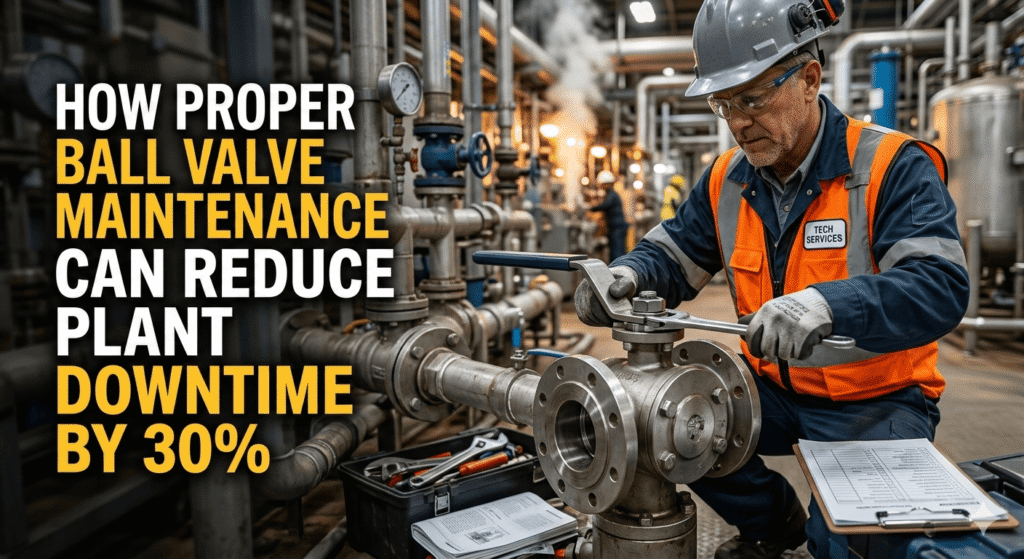
Industry experts estimate that proper ball valve maintenance can reduce plant downtime by up to 30%, helping manufacturers avoid costly operational interruptions. For industries relying on ball valve suppliers, valve stockist networks, and global valve manufacturers, maintenance strategies are just as important as product quality.
The Importance of Ball Valves in Industrial Systems :
Ball valves are widely used across industries such as oil & gas, chemical processing, water treatment, power plants, and manufacturing. Their simple design—featuring a rotating ball with a bore—allows operators to control fluid flow efficiently.
Industrial buyers typically source these valves through trusted valve suppliers, valve stockist partners, or directly from global valve manufacturers. Reliable stock valves are often kept in inventory to ensure quick replacement in case of emergency failures.
However, many plants overlook preventive maintenance, assuming ball valves will operate indefinitely without attention. This assumption often leads to unexpected failures, leaks, or complete shutdowns of production lines.
Common Causes of Ball Valve Failure :
Even high-quality valves from top ball valve suppliers can experience performance issues if not maintained properly. The most common causes include:
1. Seal Wear and Tear
Valve seats and seals experience constant friction during operation. Over time, these components degrade, leading to leakage or incomplete shut-off.
2. Corrosion and Chemical Damage
Industrial fluids often contain corrosive substances that slowly damage valve components if protective coatings and maintenance checks are ignored.
3. Debris Accumulation
Particles in pipelines can accumulate inside valves, causing blockages or restricting smooth operation.
4. Improper Operation
Frequent rapid cycling or excessive torque can strain valve components and reduce lifespan.
Even valves sourced from reputed European valve manufacturers, including Spanish valve manufacturers, require periodic inspection to maintain peak performance.
How Maintenance Reduces Plant Downtime
When plants adopt structured valve maintenance programs, operational efficiency improves dramatically. Here’s how proper maintenance can reduce downtime by nearly 30%.
1. Preventing Unexpected Failures
Routine inspections allow maintenance teams to detect small issues before they escalate into major failures. Identifying worn seals or damaged stems early helps prevent emergency shutdowns. Plants that source valves from experienced valve suppliers and maintain proper service schedules often experience significantly fewer breakdowns.
2. Extending Valve Lifespan
Ball valves are designed for long service life, but without maintenance, their durability decreases. Lubrication, cleaning, and periodic replacement of seals extend valve lifespan and reduce replacement frequency. Industrial buyers working with reliable valve stockist networks often maintain spare stock valves to minimize downtime during maintenance operations.
3. Improving Operational Efficiency
Well-maintained valves operate smoothly, ensuring precise flow control. This is critical in industries where even slight pressure fluctuations can affect production quality. High-performance valves sourced from Europe Origin Valves manufacturers are known for superior engineering, but their performance still depends heavily on proper servicing.
4. Reducing Emergency Repairs
Emergency maintenance is significantly more expensive than scheduled maintenance. Unplanned shutdowns can halt production lines, disrupt supply chains, and cause financial losses.
By following preventive maintenance practices recommended by ball valve suppliers and valve manufacturers, companies can reduce costly emergency repairs.
Best Practices for Ball Valve Maintenance
To achieve maximum reliability and minimize plant downtime, maintenance teams should follow these best practices.
Regular Inspection
Routine inspection helps identify leaks, corrosion, or abnormal valve movement. Visual checks should be performed during scheduled plant maintenance cycles.
Periodic Valve Cycling
Operating valves periodically prevents them from seizing due to inactivity. This is especially important for emergency shut-off valves that may remain idle for long periods.
Cleaning and Flushing
Debris inside pipelines can accumulate within valves. Regular cleaning ensures smooth operation and prevents blockages.
Seal and Seat Replacement
Valve seats and seals should be replaced periodically according to manufacturer guidelines. Many butterfly valves suppliers and ball valve suppliers provide maintenance kits for quick servicing.
Proper Lubrication
Lubricating moving components reduces friction and protects internal parts from wear and corrosion.
Choosing the Right Valve Partner :
Maintenance success begins with choosing reliable valve partners. Many industries prefer sourcing products from trusted valve suppliers, valve stockist distributors, or global valve manufacturers known for consistent quality.
Companies specializing in Europe Origin Valves, including reputed Spanish valve manufacturers, are often preferred due to their engineering standards, material quality, and strict manufacturing certifications.
Working with experienced butterfly valves suppliers and ball valve experts ensures access to genuine replacement parts, technical support, and maintenance guidance.
The Role of Spare Valve Inventory :
Another critical factor in minimizing downtime is maintaining adequate spare inventory. Many industrial plants rely on valve stockist partners to maintain readily available stock valves for urgent replacements. This strategy ensures that production can resume quickly even if a valve needs to be replaced during maintenance.
Conclusion:
Ball valves are essential components in industrial flow control systems, and their reliability directly impacts plant productivity. While high-quality valves from global ball valve suppliers, valve manufacturers, and Europe Origin Valves providers offer excellent durability, neglecting maintenance can still lead to operational failures.
By implementing routine inspections, replacing worn components, maintaining spare stock valves, and partnering with trusted valve stockist networks, plants can significantly reduce unexpected failures.
Ultimately, proper ball valve maintenance is not just a technical requirement—it is a strategic investment that can reduce plant downtime by up to 30%, improve operational efficiency, and protect long-term industrial productivity.