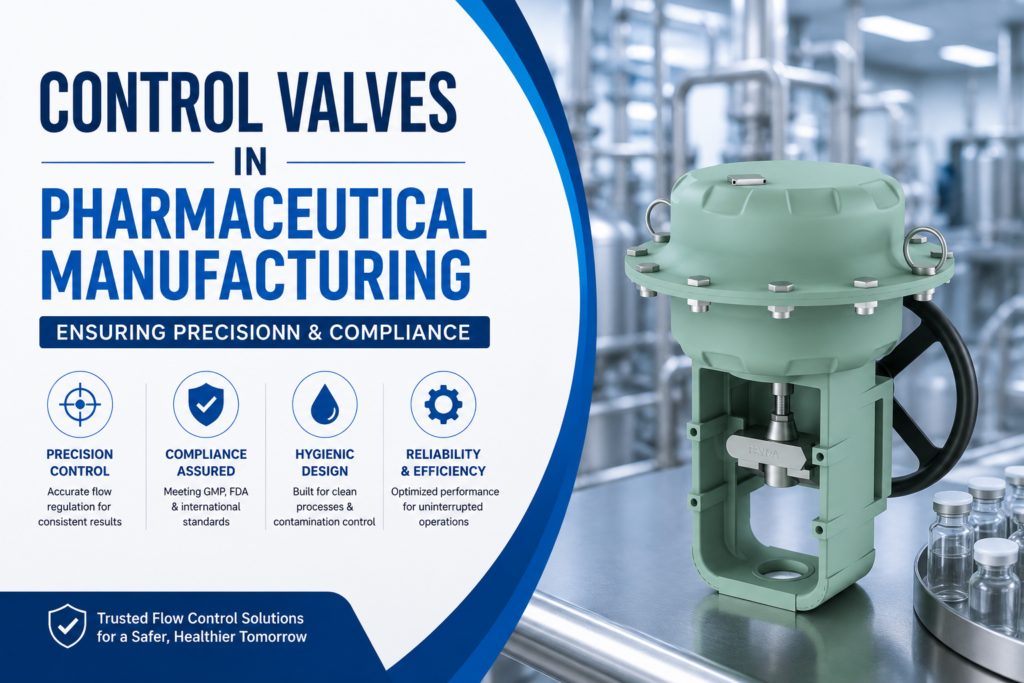
In the highly regulated world of pharmaceutical manufacturing, precision is not just important—it is critical. Every process, from mixing active ingredients to maintaining sterile environments, depends on accurate control of flow, pressure, and temperature. This is where control valves play a vital role. Partnering with reliable control valves suppliers, experienced valve manufacturers, and trusted valve suppliers ensures consistent quality, compliance, and operational efficiency.
The Importance of Control Valves in Pharma
Control valves are essential components in pharmaceutical plants, enabling precise regulation of fluids such as gases, liquids, and steam. These valves help maintain exact process conditions, which are crucial for product quality and safety.
In pharmaceutical applications, even the slightest variation can compromise an entire batch. This is why industries prefer sourcing from established European valve manufacturers, known for their strict adherence to international standards and high engineering precision. Many companies also rely on valves made in Europe due to their reputation for durability and compliance with GMP (Good Manufacturing Practice) guidelines.
Precision Control for Critical Processes
Pharmaceutical manufacturing involves complex processes such as fermentation, filtration, sterilization, and formulation. Control valves ensure that these processes operate within tightly controlled parameters.
For example:
- In sterilization, valves regulate steam flow to maintain required temperatures.
- In mixing processes, they control the flow of ingredients to ensure consistency.
- In clean-in-place (CIP) systems, they manage cleaning agents to maintain hygiene standards.
Working with a dependable valve stockist ensures that high-quality components are readily available for these critical applications. Access to a wide range of stock valves also reduces downtime, enabling quick replacements and maintenance.
Compliance with Industry Standards
Pharmaceutical manufacturing is governed by stringent regulations such as FDA, GMP, and ISO standards. Control valves must meet these requirements to ensure safety, traceability, and reliability.
Top valve manufacturers design products that comply with:
- Hygienic standards to prevent contamination
- Corrosion-resistant materials for long-term use
- Smooth surface finishes to avoid bacterial growth
Leading valve suppliers often provide certifications and documentation that support regulatory compliance. This is especially important during audits, where every component must meet strict validation criteria.
Material Selection and Hygienic Design
Material selection is a key factor in pharmaceutical valve applications. Stainless steel is commonly used due to its corrosion resistance and ease of cleaning. Advanced coatings and surface treatments further enhance performance.
Many European valve manufacturers specialize in hygienic valve designs, ensuring:
- Minimal dead zones where bacteria can grow
- Easy disassembly for cleaning and maintenance
- Compatibility with CIP and SIP (Sterilization-in-Place) systems
Choosing valves made in Europe often gives pharmaceutical companies an added advantage in meeting international compliance standards.
Reliability and Maintenance
Downtime in pharmaceutical manufacturing can result in significant financial losses and production delays. Reliable control valves minimize these risks by ensuring consistent performance over time.
A trusted valve stockist plays a crucial role in maintaining operational continuity by providing immediate access to replacement parts and stock valves. This reduces lead times and ensures that maintenance activities can be carried out without disrupting production schedules.
Additionally, modern control valves come equipped with smart diagnostics, enabling predictive maintenance. This helps identify potential issues before they lead to failures, ensuring uninterrupted operations.
Automation and Digital Integration
With the rise of Industry 4.0, pharmaceutical manufacturing is becoming increasingly automated. Control valves are now integrated with digital systems to enable real-time monitoring and control.
Advanced solutions from leading valve suppliers include:
- Smart actuators for precise control
- Sensors for monitoring flow and pressure
- Integration with SCADA and DCS systems
These technologies enhance process efficiency, reduce human error, and improve overall productivity. Collaborating with innovative valve manufacturers ensures access to the latest advancements in valve technology.
Choosing the Right Supplier
Selecting the right partner is crucial for ensuring quality and compliance. Pharmaceutical companies should look for:
- Proven experience in the industry
- Certifications and compliance with global standards
- Availability of stock valves for quick delivery
- Strong technical support and after-sales service
Working with established control valves suppliers and reputed European valve manufacturers ensures that all requirements are met, from design to installation and maintenance.
Conclusion
Control valves are indispensable in pharmaceutical manufacturing, ensuring precision, safety, and compliance at every stage of production. From maintaining sterile conditions to enabling accurate process control, their role cannot be overstated.
By partnering with reliable valve suppliers, experienced valve manufacturers, and trusted valve stockist networks, pharmaceutical companies can achieve operational excellence. Investing in high-quality valves made in Europe further strengthens compliance and performance, making them a preferred choice in this demanding industry.
In an environment where accuracy and reliability are paramount, the right control valves suppliers—and the right partners—make all the difference.