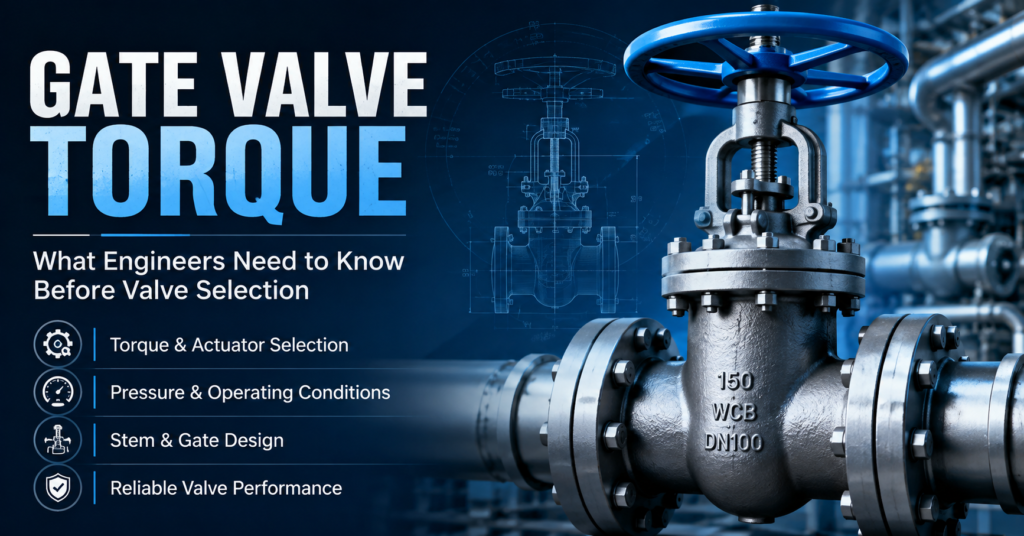
Selecting the right gate valve is about much more than choosing the correct size, pressure class, and material. Gate valve torque is a critical factor that directly affects valve operation, actuator selection, maintenance requirements, and overall system reliability. Engineers who understand torque requirements can avoid operating difficulties, premature component failure, and unnecessary costs.
For industries such as oil and gas, petrochemicals, power generation, water treatment, and process industries, working with reliable gate valve suppliers and understanding the valve’s torque characteristics is essential before final selection.
What Is Gate Valve Torque?
Gate valve torque is the rotational force required to operate the valve stem and move the gate between the fully open and fully closed positions.
For manually operated valves, this torque determines how much effort is required at the handwheel. For automated valves, it plays an important role in selecting the appropriate actuator.
Torque requirements are not constant throughout valve operation. Factors such as valve size, pressure, temperature, stem design, packing friction, gate configuration, and service conditions can influence the torque required.
Why Is Torque Important in Gate Valve Selection?
Choosing a valve without considering torque can create operational problems. If the required torque is underestimated, an actuator may not be capable of opening or closing the valve under actual operating conditions.
Excessive torque can also place unnecessary stress on the stem, actuator, gearbox, and other valve components.
Engineers should therefore consider:
• Breakaway torque
• Running torque
• Seating torque
• Unseating torque
• Maximum operating torque
• Safety factor
• Actuator output torque
A properly calculated torque requirement helps ensure smooth and dependable valve operation.
Factors That Affect Gate Valve Torque :
1. Valve Size :
Larger valves generally require greater operating torque because of increased component dimensions, packing forces, and mechanical resistance. However, torque does not simply increase in direct proportion to valve diameter. Valve design and construction also have a significant influence.
2. Pressure Differential :
The pressure difference across a valve can affect the force acting on the gate. In certain operating conditions, this can increase the effort required to unseat or operate the valve. Engineers should evaluate the valve under actual process conditions rather than relying only on nominal pressure ratings.
3. Stem and Gate Design :
Rising-stem and non-rising-stem gate valves can have different operating characteristics. Stem diameter, thread configuration, gate design, and material selection all contribute to operating torque. A valve designed for a particular application should be evaluated based on its complete mechanical configuration.
4. Packing Friction :
Stem packing creates friction around the stem. While proper packing is essential for preventing leakage, excessive packing compression can significantly increase operating torque.Incorrect packing adjustment may therefore result in difficult valve operation and accelerated wear.
5. Temperature and Fluid Conditions :
Temperature can influence lubrication, packing performance, material expansion, and overall friction. The characteristics of the process fluid can also affect valve selection.For high-temperature or demanding applications, engineers should verify the manufacturer’s recommended operating conditions and torque data.
Torque and Actuator Selection
Torque becomes particularly important when a gate valve is automated. The actuator must provide sufficient torque to operate the valve reliably under the worst expected operating conditions. Selecting an actuator based only on valve size can result in an undersized or oversized system.
An undersized actuator may fail to operate the valve, while an excessively oversized actuator can increase costs and potentially subject the valve stem and internal components to unnecessary loads. Valve manufacturers typically provide torque data or actuator-sizing recommendations for their products. Engineers should use these specifications when determining actuator requirements.
Manual Gate Valve Operation :
Manual gate valves commonly use handwheels and gear operators depending on valve size and operating requirements. Smaller valves may be operated directly using a handwheel, while larger valves can require gear-assisted operation to reduce the effort required from the operator. The objective is to achieve reliable operation without excessive manual force.
Before selecting a manual valve, engineers should consider operating frequency, accessibility, available operator force, and the possibility of future automation.
Why Buying From Reliable Suppliers Matters :
Torque data should be treated as an important technical specification rather than an afterthought. Established gate valve suppliers can provide information about valve construction, operating torque, pressure ratings, materials, standards, and actuator compatibility.
A dependable valve stockist can also be valuable when replacement valves are required quickly, particularly for maintenance shutdowns and emergency requirements.
For projects with tight delivery schedules, ex stock valves can help reduce procurement lead times when the required size, rating, material, and configuration are readily available. However, availability should never replace technical verification. Engineers should confirm that an ex-stock valve meets the application’s pressure, temperature, material, end-connection, and torque requirements.
Questions Engineers Should Ask Before Valve Selection
Before purchasing a gate valve, engineers should verify:
1. What is the required valve size and pressure class?
2. What is the operating temperature?
3. What fluid will pass through the valve?
4. What is the expected pressure differential?
5. What are the breakaway, running, and seating torque values?
6. Is the valve manually operated or automated?
7. What actuator or gearbox is required?
8. What materials and standards apply?
9. Is the valve suitable for the intended service?
10. Is technical documentation and torque data available from the manufacturer?
These questions can significantly reduce the risk of selecting an unsuitable valve.
Conclusion :
Gate valve torque is a fundamental consideration in valve selection, particularly when valves are large, automated, or installed in demanding industrial applications. Understanding the factors that influence torque allows engineers to select suitable valves, actuators, and operating mechanisms while improving reliability and reducing maintenance issues.
Whether sourcing valves directly from valve manufacturers, purchasing through experienced gate valve suppliers, or looking for readily available ex stock valves from a trusted valve stockist, technical verification should always come before procurement. The right valve is not simply one that fits the pipeline—it is one that can operate safely, reliably, and efficiently throughout its expected service life.