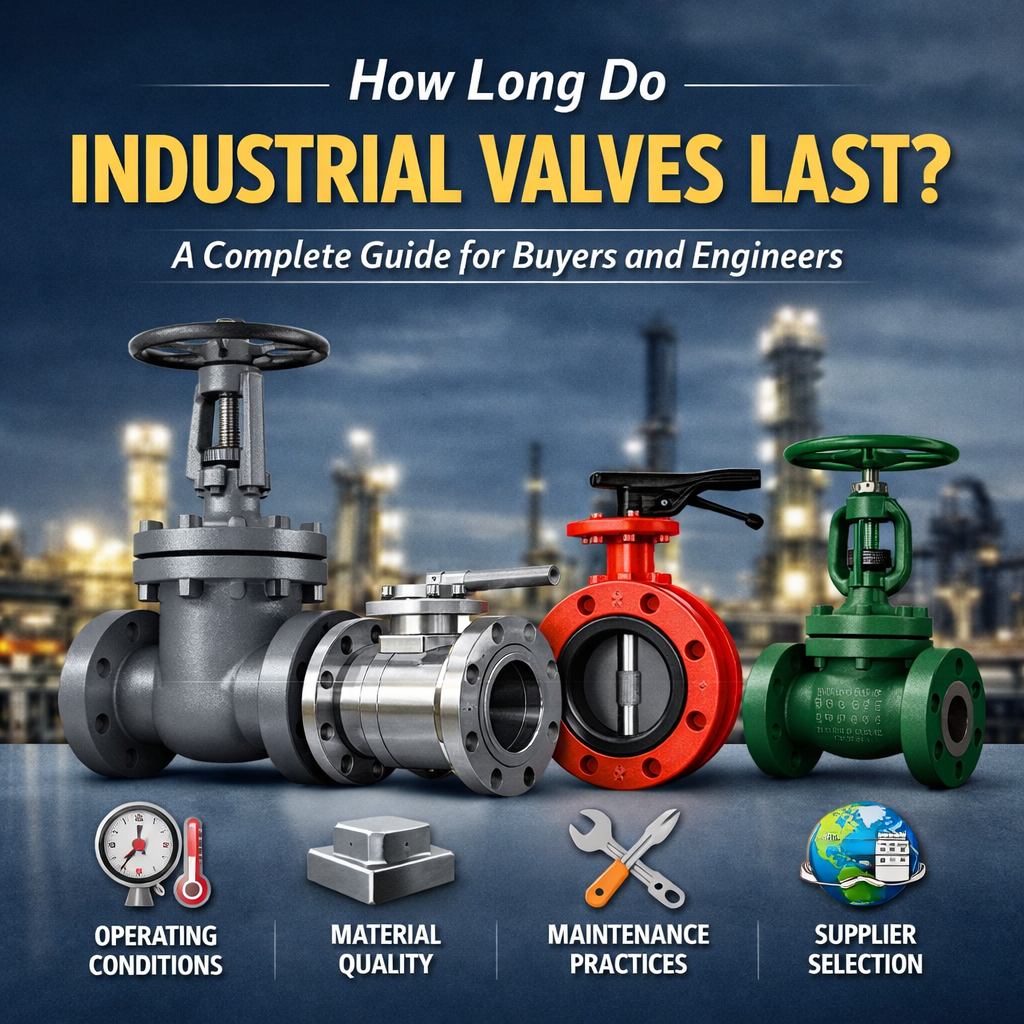
Industrial valves play a vital role in controlling the flow of liquids, gases, and slurries across industries such as oil & gas, power generation, water treatment, chemicals, and manufacturing. Whether you are sourcing from gate valve suppliers, butterfly valve suppliers, or ball valve suppliers, one question remains common: How long do industrial valves last?
The lifespan of an industrial valve is influenced by several factors including valve type, operating conditions, material quality, and maintenance practices. Understanding these aspects helps buyers choose reliable products from trusted valve suppliers and reduce long-term operational costs.
Average Lifespan of Industrial Valves
Industrial valves typically last between 5 and 25 years, depending on their application and environment. Valves used in low-pressure, non-corrosive systems tend to last longer than those exposed to extreme temperatures, chemicals, or continuous operation.
Approximate lifespan by valve type:
- Gate Valves:15–25 years
- Ball Valves:10–20 years
- Butterfly Valves:8–15 years
- Globe Valves:10–15 years
- Check Valves:5–15 years
- Control Valves:5–10 years
High-quality valves sourced from reputed valve manufacturers in Spain or certified international suppliers often exceed these averages when properly maintained.
Key Factors That Affect Industrial Valve Lifespan
- Operating Pressure and Temperature
Valves operating under high pressure or extreme temperature conditions experience greater mechanical stress. For example, steam lines or chemical processing units demand robust designs and materials to ensure longer service life.
Choosing the right valve from experienced global valve suppliers ensures compatibility with demanding environments.
- Valve Material and Construction
Material selection directly impacts durability. Common materials include:
- Carbon Steel: Strong and economical, suitable for general industrial use
- Stainless Steel: Excellent corrosion resistance and longer lifespan
- Alloy Steel: Designed for high-temperature and high-pressure applications
- Special Alloys: Used in aggressive chemical or marine environments
Premium materials from reliable ball valve suppliers and gate valve suppliers significantly reduce wear and corrosion.
- Quality of Manufacturing
The quality of casting, machining, sealing components, and testing procedures plays a critical role. Valves manufactured under international standards such as API, ASME, and ISO perform consistently and last longer.
Many industries prefer sourcing from valve manufacturers in USA due to their strict quality control, advanced engineering, and compliance with global certifications.
- Installation and Application Fit
Incorrect installation is one of the most common reasons for premature valve failure. Issues such as misalignment, over-tightening, or using the wrong valve type for the application can drastically shorten lifespan.
Experienced butterfly valve suppliers and engineering teams often provide installation guidance to ensure optimal performance.
- Maintenance and Inspection Practices
Regular inspection and preventive maintenance can double the life of an industrial valve. Key maintenance activities include:
- Lubrication of moving parts
- Checking seals and seats
- Monitoring for leaks or corrosion
- Actuator and automation checks
Valves that are serviced periodically last far longer than those ignored until failure.
The Role of Ex Stock Valves in Industrial Operations
Many industries rely on ex stock valves to reduce downtime during emergency replacements or shutdown maintenance. While ex stock valves offer faster delivery, it’s essential to ensure proper storage conditions and certification.
High-quality ex stock valves from reputed global valve suppliers maintain the same performance and lifespan as made-to-order valves when handled correctly.
Signs That an Industrial Valve Needs Replacement
Even with proper maintenance, valves eventually reach the end of their service life. Common warning signs include:
- Persistent leakage
- Difficulty in opening or closing
- Reduced flow efficiency
- Corrosion or body damage
- Increased vibration or noise
Ignoring these signs can lead to system failures, safety risks, and production losses.
Repair vs Replacement: Making the Right Choice
In many cases, repairing a valve by replacing seals, seats, or actuators is cost-effective. However, replacement is recommended when:
- The valve body is severely corroded or cracked
- Repair costs exceed replacement value
- Operational requirements have changed
- Compliance with updated safety standards is required
Consulting experience valve suppliers helps determine the most economical solution.
How to Extend the Life of Industrial Valves
To maximize valve lifespan:
- Choose the right valve type for the application
- Source from trusted global valve suppliers
- Ensure correct installation and alignment
- Follow a preventive maintenance schedule
- Use certified ex stock valves for quick replacements
- Partner with reliable valve manufacturers or internationally approved brands
These best practices improve system reliability, reduce downtime, and lower overall operating costs.
Conclusion
So, how long do industrial valves last? The answer depends on design, material quality, operating conditions, and maintenance. Valves sourced from experienced valve suppliers, typically offer long service life when used correctly.
By partnering with trusted valve suppliers and reputable valve manufacturers in industries can ensure durable performance, safety, and long-term value—making industrial valves a smart investment rather than a recurring problem.