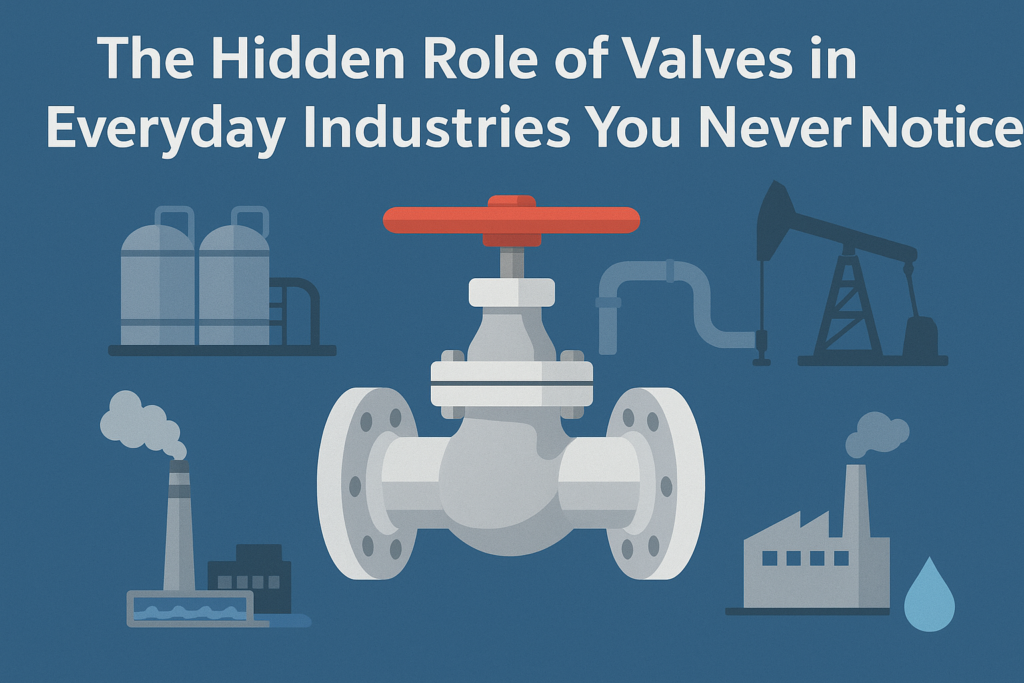
When it comes to the smooth functioning of modern industries, few people think about valves—yet they are among the most vital
components in the world of engineering and infrastructure. From power plants and water systems to food factories and hospitals, valves control the movement of liquids and gases that keep operations running efficiently and safely.
These unassuming devices—produced by specialized valve manufacturers and distributed by trusted global valve suppliers—are the silent force behind nearly every industrial process. Let’s uncover the hidden role of valves in the everyday industries you rarely notice but depend on every single day.
1. The Backbone of Industrial Flow Control :
A valve is essentially a control device that regulates the flow of liquids or gases within a system. By opening, closing, or partially obstructing passageways, valves maintain proper direction, pressure, and flow rates. Common types include ball valves, gate valves, and butterfly valves—each serving unique purposes depending on pressure, temperature, and application.
Industrial facilities often rely on thousands of valves to operate safely. Whether it’s a chemical plant, refinery, or water treatment unit, these valves ensure that operations stay stable and controlled. Without them, industries would face unsafe pressure levels, leaks, and production inefficiencies.
2. Power and Energy: Where Valves Command the Flow:
In the energy sector, valves are indispensable. They regulate oil, gas, steam, and water in complex systems where precision is critical.
• Ball valves are widely used in pipelines carrying crude oil and natural gas because of their tight sealing and durability under high pressure.
• Gate valves are preferred for on-off control in refineries, while butterfly valves are common in cooling water systems due to their light weight and easy operation.
Reliable gate valve suppliers and ball valve suppliers ensure that these components meet stringent safety and quality standards for long-term performance. In renewable energy facilities like hydropower or geothermal plants, valves help control the movement of water or steam to turbines, directly impacting energy efficiency.
3. Water and Wastewater: Sustaining Urban Life
Clean water systems are among the greatest achievements of modern civilization—and valves are at their heart. Municipal water networks rely on control valves, check valves, and pressure-reducing valves to maintain steady flow and prevent backflow contamination.
In wastewater treatment, valves handle the safe transfer of sewage through filtration and disinfection stages before it’s released back into the environment. Every city depends on valve manufacturers and global valve suppliers to maintain reliable systems that protect public health and sustain urban growth.
4. Food and Beverage: Ensuring Hygiene and Quality
In food processing and beverage manufacturing, valves ensure hygiene, safety, and consistency. Whether it’s brewing beer, bottling soft drinks, or processing dairy products, sanitary valves regulate pressure and temperature while preventing contamination.
• Butterfly valves are used extensively in breweries for managing fermentation and filtration.
• Ball valves handle carbonation and bottling processes.
These valves, often crafted from stainless steel, are supplied by butterfly valve suppliers and ball valve suppliers who adhere to international food safety standards. Without them, large-scale food production and preservation would be nearly impossible.
5. Pharmaceuticals and Healthcare: Precision Under Pressure
In the healthcare and pharmaceutical industries, the accuracy and cleanliness of valves are critical. Diaphragm valves and needle valves regulate the flow of gases and liquids used in the production of medicines, vaccines, and IV fluids.
Hospitals also rely on valves in oxygen supply systems, dialysis equipment, and sterilization units. High-grade Europe Origin Valves are often preferred for these applications because they offer superior material quality, durability, and compliance with global standards.
6. Manufacturing and Automation: Driving Efficiency
Modern factories operate with high levels of automation, where valves are central to controlling fluids, air, and chemicals in machines. Solenoid valves and pneumatic valves manage everything from cooling and lubrication systems to robotic assembly lines.
With the rise of smart manufacturing, intelligent valves equipped with sensors now monitor pressure, flow, and temperature in real time. They allow predictive maintenance—reducing downtime and improving efficiency. Valve manufacturers across the world are now integrating IoT-enabled features into their designs to meet the growing demand for automation-ready systems.
7. Everyday Life: Valves You Never See but Always Use
Valves aren’t confined to factories or plants—they’re part of daily life. Every time you open a faucet, drive your car, or switch on your air conditioner, a valve is working silently behind the scenes.
• Your car’s engine uses valves to control air and fuel flow.
• Washing machines rely on valves to regulate water levels.
• Home plumbing systems depend on stock valves for maintenance and pressure control.
These small yet vital components ensure comfort, convenience, and safety in every household and workplace.
8. The Global Valve Industry: Connecting Quality and Innovation
Behind all these applications stands a robust international network of valve manufacturers, ball valve suppliers, gate valve suppliers, and butterfly valve suppliers. Many industries prefer Europe Origin Valves for their precision engineering, reliability, and compliance with European safety standards.
Meanwhile, global valve suppliers cater to the growing demand for stock valves—ready-to-ship products that minimize downtime and support urgent industrial needs. Whether it’s energy, water, food, or pharmaceuticals, these suppliers form the backbone of global industrial progress.
Conclusion: The Invisible Heroes of Modern Industry
Valves may be small, but their impact is enormous. They control the lifeblood of industries—fluids and gases—that power cities, feed nations, and sustain life. From ball valve suppliers supporting oil and gas operations to butterfly valve suppliers enabling food processing and global valve suppliers connecting industries worldwide, valves remain the hidden heroes of modern engineering.
So, the next time you turn on a tap, step into a factory, or fly in an aircraft, remember—somewhere inside, a valve is quietly doing its job to keep the world flowing smoothly.